



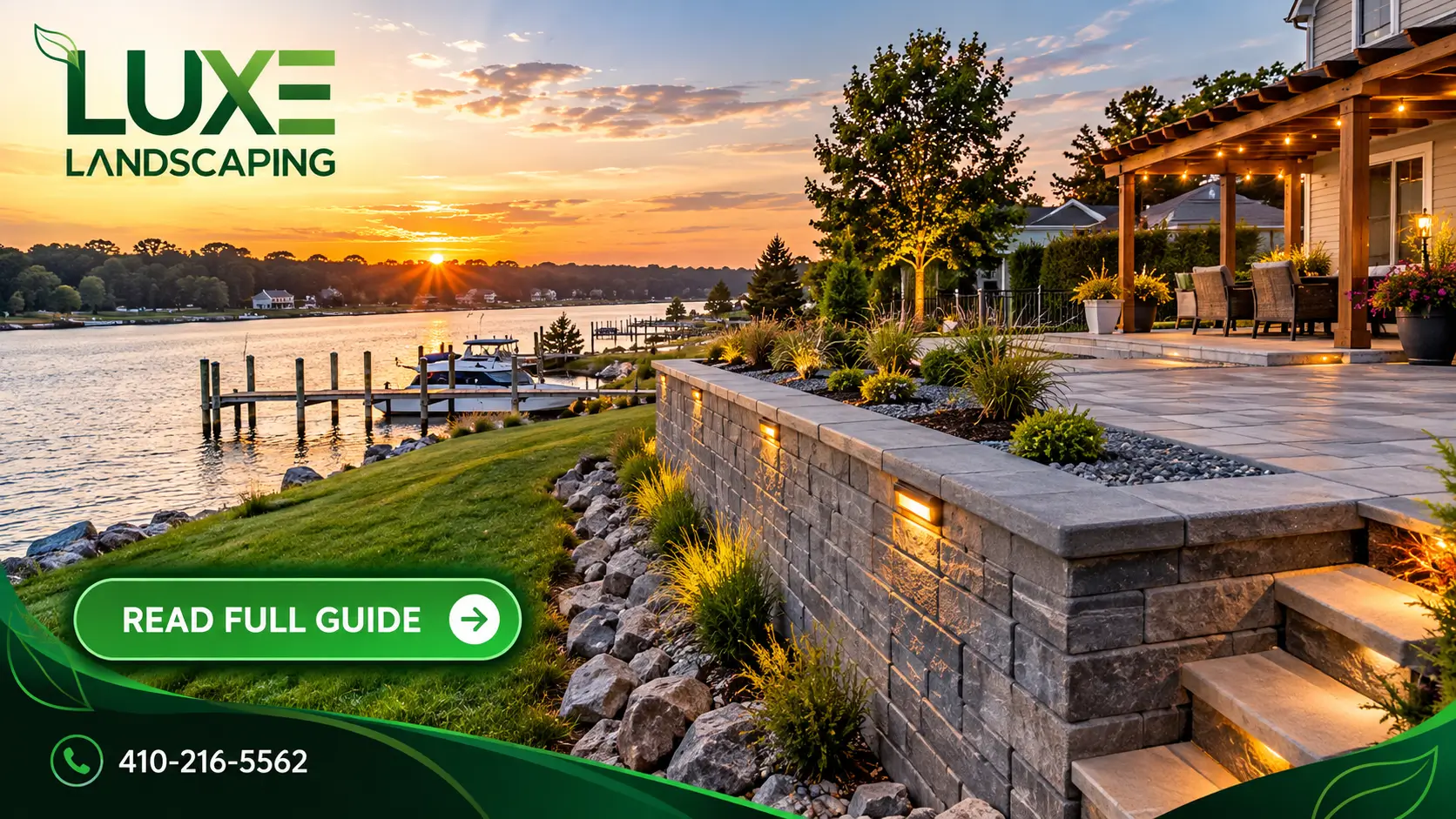
Owning waterfront property around the Chesapeake Bay comes with a unique set of maintenance challenges. Erosion, changing grades, stormwater runoff, wave action, and unstable slopes can gradually reduce usable property and threaten existing landscape features.
Naturally, one of the first questions homeowners ask is about the waterfront retaining wall cost in Chesapeake Bay communities.
The answer can range from several thousand dollars for a relatively straightforward upland retaining wall to tens of thousands of dollars or more for a substantial waterfront project. True shoreline stabilization can cost significantly more because engineering, marine access, permits, drainage, specialized materials, and environmental requirements may all become part of the project.
Luxe Landscaping works with homeowners throughout Annapolis and Anne Arundel County on retaining walls and seating walls, including properties where erosion, slopes, and waterfront conditions affect the overall landscape.
What Does a Waterfront Retaining Wall Typically Cost?
It is important to first determine what kind of wall you actually need.
A retaining wall located uphill from the shoreline is different from a bulkhead, seawall, revetment, or living shoreline built directly along tidal water.
For a general reference, current Baltimore-area retaining wall pricing ranges from roughly $40 to $360 per linear foot for walls approximately 2 to 6 feet tall. Height, material, reinforcement, excavation, drainage, and terrain can change that number considerably.
True shoreline erosion projects operate in a much wider range. Maryland DNR states that living shoreline construction can cost about $100 to more than $1,000 per linear foot depending on wave energy, water depth, orientation, fetch, and overall site conditions.
For a Chesapeake Bay waterfront property, these figures should be considered early planning references rather than quotes.
Why Retaining Wall Pricing in Anne Arundel County Varies So Much
Retaining wall pricing in Anne Arundel County is highly site-specific. Two properties separated by only a few miles can require completely different construction approaches.
Wall Height and Length
More wall means more excavation, base preparation, drainage, reinforcement, material, and labor.
Height can have an even greater impact than length because taller walls hold back substantially more soil pressure and may require additional engineering.
A 100-foot decorative wall that is 2 feet tall is not comparable to a 100-foot structural wall supporting a steep waterfront slope.
Property Access
Access is particularly important around Chesapeake Bay homes.
Some properties have open side yards where equipment can easily reach the work area. Others may have:
- Narrow access between homes
- Existing decks and patios
- Mature landscaping
- Steep slopes
- Fences
- Limited equipment access
- Water-only access to certain areas
When excavated soil, aggregate, stone, and equipment must be moved with smaller machinery or additional labor, project costs increase.
Soil and Slope Conditions
A waterfront wall cannot be priced accurately without understanding what it needs to retain.
Loose soil, steep grades, existing erosion, saturated areas, and unstable slopes can require a more involved solution than a wall built on a relatively level inland property.
The amount of earth being retained also influences foundation depth, reinforcement, and drainage.
How Does Drainage Affect Waterfront Retaining Wall Cost?
Drainage is one of the most important parts of retaining wall construction.
Soil behind a wall can become saturated during heavy Maryland rainfall. Without a way for water to escape, hydrostatic pressure builds behind the structure.
A properly planned wall may require:
- Free-draining aggregate
- Drain pipe
- Filter fabric
- Drainage outlets
- Grading adjustments
- Downspout management
- Surface runoff improvements
Those items add to the construction price, but leaving them out simply to lower an estimate can create a much more expensive problem later.
For homeowners planning additional improvements, retaining walls, drainage, and custom outdoor living spaces should ideally be considered together so water movement and finished elevations make sense across the property.
Is a Shoreline Wall More Expensive Than a Standard Retaining Wall?
Often, yes.
A conventional landscape retaining wall is primarily designed to hold back soil and manage grades.
A structure installed directly at the shoreline may need to deal with tides, wave energy, fluctuating water levels, erosion, scour, and environmental regulations.
Waterfront Structures May Require Specialized Design
Depending on the site, erosion protection could involve:
- Living shoreline techniques
- Riprap or stone revetment
- Marsh planting
- Stone sills
- Beach nourishment
- Bulkheads
- Structural walls
- Hybrid erosion-control systems
Maryland generally requires nonstructural living shoreline approaches to be considered for shoreline erosion protection unless conditions support approval of a structural alternative.
That is why homeowners should avoid assuming that building a vertical wall at the water's edge is automatically the correct or permitted solution.
What Determines Erosion Control Cost in Maryland?
The erosion control cost in Maryland depends on what is causing the erosion and where it is occurring.
Wave Exposure
A protected creek may experience very different forces from open Chesapeake Bay frontage.
Higher wave energy can require larger stone, stronger stabilization methods, or more complex design.
Shoreline Length
Shoreline projects are often discussed in linear feet.
A 40-foot erosion area can have a very different budget from a 200-foot waterfront edge, even when conditions are otherwise similar.
Water Depth and Shoreline Geometry
Water depth near the shoreline, slope, bank height, and the distance over which wind can generate waves can influence what stabilization method is suitable.
Maryland even uses these types of property characteristics when evaluating potential shoreline stabilization approaches.
Existing Damage
Repairing a shoreline before severe failure occurs can be different from rebuilding after substantial soil loss, wall collapse, or washout.
An existing failed wall may also need demolition and removal before new construction begins.
Do Permits Increase the Cost of a Waterfront Retaining Wall?
They can.
In Anne Arundel County, residential retaining walls over 24 inches require a permit. Residential riprap and shoreline-related structures can also require permitting.
Projects involving tidal wetlands or tidal waters may require additional Maryland Department of the Environment review.
Permit-Related Costs Can Include More Than the Permit Fee
The budget may need to account for:
- Site plans
- Construction drawings
- Engineering
- Critical Area documentation
- Grading plans
- Environmental review
- Permit fees
- Additional design work
Not every project needs every item.
An upland retaining wall may follow a much simpler approval process than a shoreline stabilization project involving tidal water.
Starting the permitting conversation early helps homeowners understand which costs actually apply before construction is scheduled.
How Do Materials Affect Retaining Wall Pricing?
Material choice influences both appearance and structural design.
Common options include:
- Segmental concrete block
- Natural stone
- Large-format retaining blocks
- Poured concrete
- Boulder walls
- Reinforced systems
Natural stone can create a premium appearance that fits high-end waterfront landscapes, while engineered block systems may provide flexibility for larger grade changes.
The right material should be selected based on more than appearance. Wall height, soil pressure, drainage, access, engineering requirements, and the surrounding architecture all matter.
You can review completed Luxe Landscaping projects to see how hardscape features can be incorporated into a broader landscape design.
Can Retaining Wall Work Be Combined With a Patio Project?
Yes, and in many sloped waterfront backyards it makes sense to plan the two together.
A retaining wall can create usable space that did not previously exist.
For example, a steep backyard might be redesigned to include:
- A level entertaining area
- Paver patio
- Landscape steps
- Planting beds
- Seating walls
- Improved drainage
- Safer transitions between elevations
Planning the wall first and the patio later can sometimes create elevation or drainage conflicts.
When both are part of the goal, an integrated design can help ensure that the patio, walkways, and surrounding hardscape work together.
How Can Homeowners Control Retaining Wall Costs?
The goal should not be to build the cheapest possible wall. It should be to spend money where it matters.
Address the Actual Erosion Problem
Determine whether the problem is caused by waves, uphill runoff, drainage, a failing slope, or a combination of factors.
A wall will not solve poor drainage if the drainage itself is never corrected.
Avoid Unnecessary Complexity
Curves, premium stone, multiple terraces, and integrated seating can create beautiful results, but they also increase labor and material requirements.
If the primary goal is stabilization, establish the structural needs first and then decide which visual upgrades fit the budget.
Plan Before the Problem Becomes Severe
Waiting until a wall has collapsed or a large portion of the slope has washed away can reduce available options.
Early evaluation provides more time to plan permitting, drainage, access, and construction logically.
Is a Waterfront Retaining Wall Worth the Investment?
For a property experiencing real erosion or unstable grades, the value is not limited to appearance.
A properly planned retaining wall can help:
- Stabilize slopes
- Protect usable landscape areas
- Improve drainage management
- Create level outdoor space
- Support patios or walkways
- Improve movement through the yard
- Make a steep property more functional
On premium Chesapeake Bay properties, the wall may also become part of a larger outdoor living design rather than looking like a purely structural feature.
Get a Site-Specific Waterfront Retaining Wall Estimate
There is no reliable one-price answer for waterfront retaining wall cost in Chesapeake Bay communities.
A standard retaining wall might be priced using familiar hardscape measurements, while a true shoreline erosion project can involve engineering, environmental review, permitting, specialized access, and a completely different construction method.
That is why the first step should be evaluating the actual property.
Luxe Landscaping works with homeowners around Annapolis and Anne Arundel County who are dealing with slopes, erosion, retaining walls, drainage, hardscaping, and larger outdoor living improvements.
Homeowners researching a local contractor can also view Luxe Landscaping's Google Business Profile and customer reviews.
If you are concerned about erosion or want to understand retaining wall pricing in Anne Arundel County for your specific waterfront property, contact Luxe Landscaping to discuss the site, design goals, and next steps.
Frequently Asked Questions
How much does a waterfront retaining wall cost on the Chesapeake Bay?
Costs vary widely. Standard retaining walls in the broader Maryland region can range from roughly $40 to $360 per linear foot depending heavily on height and construction type, while Maryland DNR reports living shoreline projects ranging from about $100 to more than $1,000 per linear foot. True waterfront pricing requires a site evaluation.
Why are waterfront retaining walls more expensive?
Waterfront projects may require additional drainage, engineering, permits, erosion protection, difficult access, specialty materials, or construction methods designed for wet and unstable conditions.
What affects retaining wall pricing in Anne Arundel County?
Important factors include wall length, wall height, material, soil conditions, slope, excavation, drainage, equipment access, engineering, permits, and whether the project is located in the Chesapeake Bay Critical Area or directly along tidal water.
Does a retaining wall over 24 inches need a permit in Anne Arundel County?
Anne Arundel County currently states that residential retaining walls over 24 inches require a permit. Waterfront projects may have additional requirements depending on their location and scope.
How much does erosion control cost in Maryland?
There is no universal price. Maryland DNR reports that living shoreline construction can range from approximately $100 to more than $1,000 per linear foot depending on site conditions and technique. Upland erosion-control work may cost considerably less when tidal shoreline construction is not involved.
Is a retaining wall the same as a bulkhead?
No. A landscape retaining wall typically holds back soil and manages grade changes on the property. A bulkhead is a structural shoreline stabilization feature located along the water. Different design standards and permits can apply.
How do I get an accurate price for my waterfront property?
A contractor needs to evaluate the wall location, dimensions, slope, erosion, drainage, soil, access, existing structures, and permitting considerations. A property-specific consultation is much more reliable than multiplying shoreline length by a generic online price.

Ready to Transform Your Backyard?