



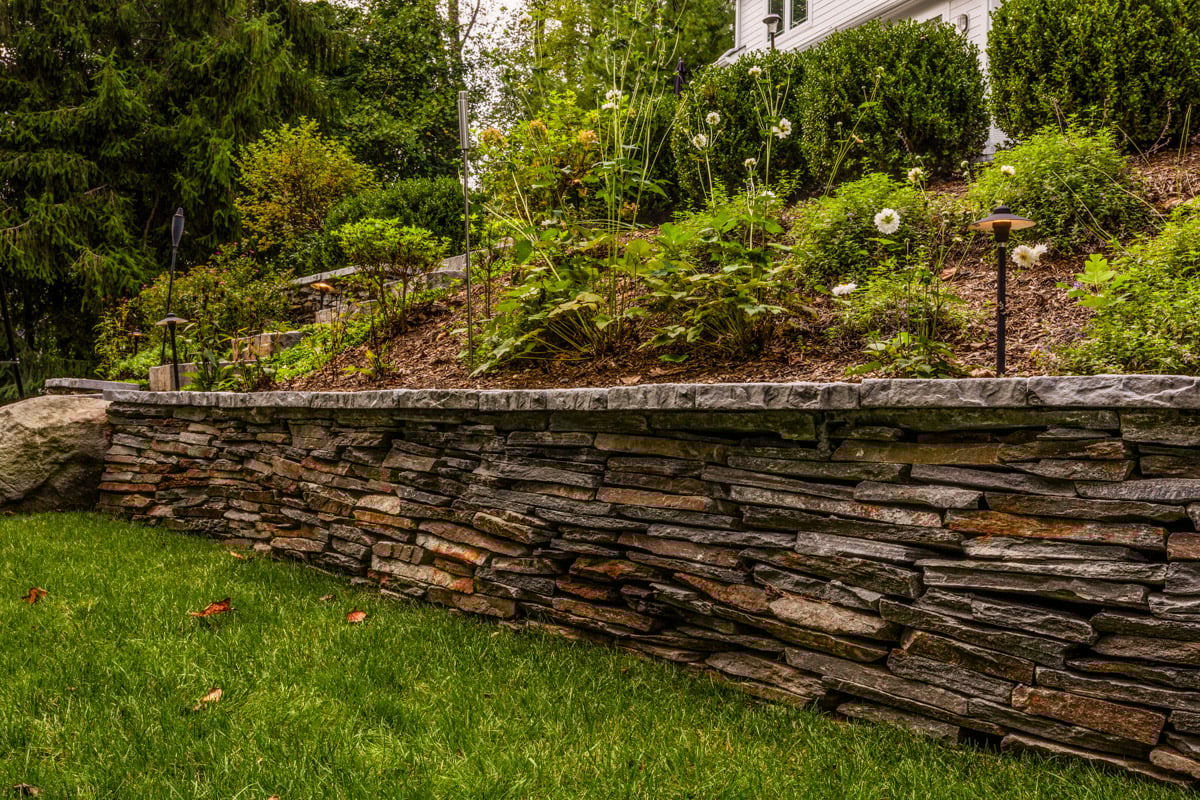
A retaining wall is one of the most functional and visually impactful features you can add to your landscape. Whether you're battling erosion, wanting to level a sloped yard, or looking to add beautiful stone architecture to your outdoor space, retaining wall installation provides lasting strength and stunning design.
Retaining walls not only support soil—they redefine your yard, transform unusable areas, and add structure that elevates the entire look of your property. Here’s everything homeowners should know.
Why Homeowners Choose Retaining Wall Installation
Retaining walls offer strong functional and aesthetic benefits:
✔ Prevent Erosion
Keeps soil in place during heavy rain and slope runoff.
✔ Add Usable Space
Create flat areas for patios, gardens, or play zones.
✔ Improve Drainage
Protects your property from pooling and slope washout.
✔ Enhance Curb Appeal
Stone walls add architectural beauty and structure.
✔ Support Sloped Landscapes
Transforms steep areas into layered, functional terraces.
✔ Doubles as Seating Walls
Perfect for patios and outdoor living areas.
A retaining wall is one of the best long-term investments for your yard.
Types of Retaining Walls for Residential Yards
Different properties require different types of walls depending on soil, elevation, and design goals.
1. Segmental Block Retaining Walls (Most popular)
Interlocking concrete blocks engineered for strength.
Benefits:
- Durable and long-lasting
- Variety of colors and textures
- Great for tall or multi-tier walls
2. Natural Stone Retaining Walls
Premium, timeless, and extremely beautiful.
Benefits:
- Natural texture
- High-end appearance
- Perfect for luxury landscapes
3. Timber Retaining Walls
Warm, rustic, and budget-friendly.
Benefits:
- Great for garden beds
- Soft, natural appearance
- Lower upfront cost
4. Boulder Retaining Walls
A rugged, natural look with large stone placement.
Benefits:
- Unique and organic aesthetic
- Excellent for erosion control
- Low maintenance
5. Concrete Retaining Walls
Strong and fully customizable.
Benefits:
- Extremely durable
- Can be finished in many textures
- Great for modern landscapes
Best Uses for Retaining Walls
Retaining walls can transform almost any area of a landscape:
✔ Supporting sloped yards
Prevents soil from slipping or eroding.
✔ Creating garden beds or terraces
Allows multiple planting levels.
✔ Building raised patios or seating areas
Adds function and style.
✔ Separating different elevation zones
Creates smooth transitions in the yard.
✔ Enhancing front yard curb appeal
Stone walls bring instant character.
✔ Solving drainage issues
Directs water safely away from the home.
Signs You Need Retaining Wall Installation
Homeowners usually start searching when they notice:
- Sloped yard difficult to use
- Soil erosion or washouts after rain
- Pooling or drainage problems
- Cracked or failing old retaining walls
- Uneven ground around patios or walkways
- Desire for more functional outdoor space
- Hillside starting to shift or slide
If you see any of these, a retaining wall is the solution.
Retaining Wall Design Ideas Homeowners Love
✔ Multi-tier terraced walls
Great for steep slopes and layered planting.
✔ Retaining wall with integrated steps
Beautiful transition between yard levels.
✔ Stone retaining wall with seating cap
Functions as both wall and outdoor seating.
✔ Curved retaining walls
Softer, decorative look for garden spaces.
✔ Modern linear block walls
Clean and stylish for contemporary homes.
✔ Boulder wall with mixed natural plants
Perfect for rustic or native landscapes.
Why Professional Retaining Wall Installation Matters
Retaining walls require structural expertise—if installed incorrectly, they can fail dangerously.
Professionals ensure:
✔ Proper excavation
✔ Correct wall slope (batter)
✔ Reinforced base and footings
✔ Geogrid reinforcement for tall walls
✔ Correct drainage behind the wall
✔ Strong compaction
✔ Proper backfilling techniques
A DIY wall may collapse, lean, or crack within months—professional installation ensures decades of stability.
What’s Included in Retaining Wall Installation
A complete installation typically includes:
- Property evaluation
- Height and load analysis
- Excavation and grading
- Leveling base installation
- Block or stone placement
- Reinforcement with geogrid (if needed)
- Drainage pipe and gravel backfill
- Finishing caps and cleanup
The result is a strong, beautiful wall that enhances both your landscape and property value.

Ready to Transform Your Backyard?